Mobile Marketing Strategy in 2026: The Complete Guide
SMS, push notifications, in-app marketing, mobile ads, and short-form video — the channel-by-channel data behind a mobile strategy that actually converts.

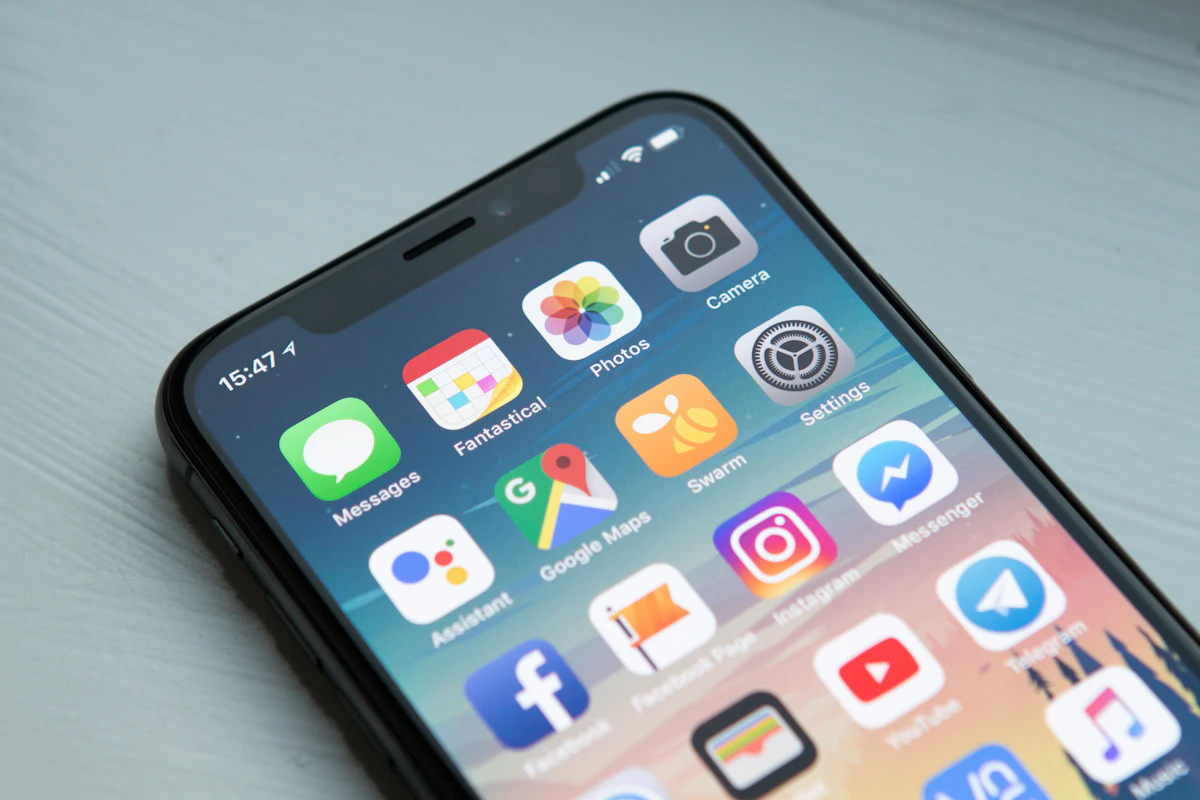
Mobile isn’t a channel inside a marketing plan anymore — it’s the surface nearly every plan runs on. Mobile devices now account for roughly 60.7% of global internet traffic, mobile commerce has crossed the $4.5 trillion mark, and global mobile ad spend is projected to exceed $430 billion, absorbing about 74% of total digital advertising investment worldwide. The question for any brand isn’t whether to invest in mobile — that decision was made for you years ago — it’s whether the investment reflects the precision this medium now demands.
That precision gap is exactly where most mobile strategies fall short. Brands still send broadcast push notifications on a calendar instead of a trigger, treat SMS as an afterthought despite it out-converting almost every other owned channel, and pour ad budget into mobile placements without the privacy-era attribution discipline the medium now requires. Meanwhile the tools to do this well have never been more accessible — AI-driven personalization in email and SMS now generates roughly 2.3 times higher conversion rates than generic mobile ads, and personalized, segmented push messages achieve four times the engagement of broadcast sends.
This guide breaks mobile marketing into its core channels — SMS and messaging, push notifications, in-app and app-store marketing, mobile advertising, and short-form video — with the current performance data behind each, followed by the strategies that turn mobile from a cost center into a genuine relationship-building channel.
Mobile Marketing, by the Numbers
*Sources: Digital Applied Mobile Marketing Statistics (AppsFlyer, Adjust, Sensor Tower, eMarketer), RevenueMemo, SearchLab, Cropink.
The Core Mobile Channels, Side by Side
Every mobile strategy is built from some combination of these five channels. Knowing their baseline performance is the starting point for deciding where to invest first.
| Channel | Key benchmark | Best for |
|---|---|---|
| SMS & messaging | 98% open rate, 45% conversion, 19% CTR | Time-sensitive offers, transactional updates, highest raw ROI |
| Push notifications | 7.8% average reaction rate; 57%+ for behavior-triggered sends | Re-engagement of app users; 15% of e-commerce revenue from just 3% of sends |
| In-app / app store (ASO) | M-commerce = 73% of global e-commerce | Owned, high-intent audience already past the download decision |
| Mobile advertising | 72–74% of digital ad spend; ~1.3% average CTR | Reach and acquisition at scale, especially via Google, Meta, TikTok |
| Short-form video | 60%+ of mobile ad engagement (TikTok, Reels, Shorts) | Discovery, brand awareness, top-of-funnel storytelling |
The pattern worth noticing: SMS and push have the smallest reach but the highest response rates, because both require explicit opt-in — you’re reaching people who already raised their hand. Paid mobile ads and short-form video have the opposite profile: massive reach, lower individual response, better suited to awareness and top-of-funnel discovery than direct conversion.
SMS & Messaging: The Highest-ROI Channel Most Brands Underuse
SMS remains the most underrated channel in mobile marketing, largely because its reach looks small next to paid media. But the response data is difficult to argue with: 91% of mobile users read a text message within three minutes of receiving it, and 56% of consumers say they’re more likely to engage with a brand that uses SMS for timely offers. Customers engaged via SMS spend roughly 22% more, and brands that add SMS alongside email earn about 19% more total revenue than email alone.
Adoption is accelerating fast — 47% of US e-commerce brands now use SMS marketing, up 16 percentage points in a single year. WhatsApp and other messaging apps are following a similar trajectory; roughly 10.5% of marketers already cite messaging apps as one of their biggest ROI drivers. The opt-out rate for well-run SMS programs stays remarkably low, typically between 0% and 1.5%, which tells you how tolerant subscribers are of the channel when it’s used for genuinely relevant, time-sensitive messages rather than constant promotion.
Push Notifications: Precision Beats Volume
Push notification usage has a real ceiling — 23% of app uninstalls are directly caused by notification overuse, so volume without discipline actively costs you users. The fix isn’t sending less; it’s sending better. Personalized push notifications increase app retention by roughly 32–35% and lift engagement fourfold compared to generic broadcast sends. Automated, behavior-triggered notifications — tied to browsing history, purchase patterns, or location rather than a calendar — achieve open rates north of 57%, far above the blended average.
The revenue math makes the case on its own: push notifications generate about 15% of attributed e-commerce revenue from just 3% of total message volume — the highest revenue-to-volume ratio of any direct messaging channel, precisely because push reaches a self-selected, high-intent audience that already demonstrated brand affinity by installing and keeping your app.
Every push notification should have to earn the interruption. If it isn’t tied to something the specific user actually did — browsed, bought, abandoned, or is near — it’s a broadcast blast wearing a personalization costume.
In-App Marketing and App Store Optimization
Once someone installs your app, you own one of the highest-intent relationships in marketing — mobile commerce alone now accounts for 73% of all global e-commerce sales, and that share keeps climbing. Two disciplines matter most inside this channel: app store optimization (ASO), which determines whether new users find and install your app in the first place, and in-app engagement design, which determines whether they stick around afterward.
Progressive web apps (PWAs) are also gaining real traction as a lighter-weight alternative — roughly 32% of e-commerce sites now use a PWA instead of, or alongside, a native app, avoiding the friction of an app-store install entirely while still delivering an app-like mobile experience. For brands without the resources to build and maintain a full native app, this is an increasingly credible middle path.
Get the Mobile Marketing Playbook
Join thousands of marketing leaders getting our weekly playbook — channel benchmarks, push and SMS frameworks, and mobile growth tactics — straight to your inbox.
Twelve Mobile Marketing Strategies Worth Prioritizing
-
Build trigger-based flows, not calendar blasts
Tie SMS and push sends to real behavior — browsing history, purchase patterns, location, time of day — rather than scheduling broadcasts on a marketing calendar. Behavior-triggered messages consistently outperform scheduled blasts on every engagement metric that matters.
-
Personalize by behavior, not just demographics
Only 47% of companies currently personalize push messages based on actual user behavior rather than basic demographic segments — meaning the majority are leaving a proven engagement lift on the table. Behavioral personalization is the single highest-leverage change most mobile programs can make.
-
Combine SMS and push, don’t choose one
76% of businesses now use SMS and push together for real-time engagement, using each channel for what it does best — push for app-native re-engagement, SMS for anything time-sensitive that needs to reach someone regardless of whether the app is open.
-
Respect the opt-out before it happens
Notification fatigue is real and measurable — 23% of app uninstalls trace directly to over-notification. Cap frequency deliberately and let relevance, not volume, drive engagement.
-
Design mobile-first, not mobile-adapted
With the majority of web traffic and PPC clicks now mobile, build landing pages and checkout flows starting from the smallest screen and scaling up — not the reverse. A desktop-first page retrofitted for mobile almost always shows in a weaker mobile conversion rate.
-
Invest in short-form video for discovery
TikTok, Instagram Reels, and YouTube Shorts collectively drive more than 60% of mobile ad engagement. If your top-of-funnel content strategy doesn’t include short-form video, you’re absent from the format actually earning attention on the devices your customers use most.
-
Use AI personalization on your highest-intent channels first
AI-driven personalization in email and SMS is generating roughly 2.3 times higher conversion than generic mobile ads. Apply AI-assisted segmentation and send-time optimization to SMS and push before spreading it thin across every channel.
-
Concentrate paid spend where mobile ad dollars actually go
The top three mobile ad destinations — Google, Meta, and TikTok — now capture roughly 67% of all mobile ad spend. Fragmenting budget across many smaller platforms usually produces a weaker result than mastering the channels where your audience and competitors both already are.
-
Layer in location-based triggers where relevant
Global spend on location-based marketing has climbed into the tens of billions of dollars, and geofenced offers convert well for any business with a physical or event-based presence — sending a relevant nudge only when a customer is genuinely near matters, rather than relying on broad demographic targeting alone.
-
Plan for a privacy-first attribution model
Mobile measurement has moved into a genuinely privacy-constrained era. Build campaigns and reporting around aggregated, consented, and first-party data rather than individual-level tracking assumptions that increasingly don’t hold up across platforms and regions.
-
Treat regulated or compliance-heavy verticals with extra care
Mobile’s speed and directness make it powerful — and riskier — for industries under real regulatory scrutiny. An SMS renewal reminder or a push notification about a rate change works well for an insurer, for instance, but every message still has to hold up against the same compliance standards as any other channel; our guide to insurance marketing strategies covers what that discipline looks like in a heavily regulated category specifically.
-
Feed mobile channels with a real content engine
SMS, push, and short-form video all need a steady supply of genuinely useful, well-targeted content to stay effective — a mobile channel strategy with no content behind it runs dry fast. If building that pipeline internally isn’t realistic, our roundup of leading content marketing strategy services agencies covers partners built for exactly that kind of ongoing content production.
-
Measure revenue per channel, not just engagement
Open rates and click-through rates are useful diagnostics, but the number that should drive budget decisions is revenue or conversion attributed per channel — push notifications, for example, punch far above their message volume in actual e-commerce revenue, a fact that pure engagement metrics alone would never surface.
Mistakes That Undermine Mobile Marketing Performance
- Sending push notifications on a schedule instead of triggered by real user behavior
- Treating SMS as an afterthought despite it outperforming nearly every other owned channel
- Personalizing by demographic segment alone instead of actual behavior
- Over-notifying until users disable notifications or uninstall entirely
- Building desktop-first pages and retrofitting them for mobile as an afterthought
- Spreading paid budget thin across many platforms instead of concentrating where spend already flows
- Ignoring short-form video as a discovery channel
- Measuring engagement without tying any of it back to actual revenue per channel
Final Thoughts
Mobile marketing has stopped being a channel you bolt onto a broader plan — it’s the surface the plan has to be built around from the start. The data across SMS, push, in-app, paid, and video all points the same direction: precision and relevance consistently beat volume and reach. A single well-triggered SMS message outperforms a dozen generic broadcasts; a behavior-triggered push notification outperforms a scheduled blast by a wide margin.
The brands winning on mobile right now aren’t necessarily spending the most — they’re the ones treating every notification, text, and mobile ad as something that has to earn its place in a genuinely crowded pocket. That means trigger-based flows over calendars, behavioral personalization over demographic guesswork, and revenue-per-channel measurement over vanity engagement metrics.
Start with SMS and push if you’re not already using both — they’re the highest-ROI, most under-invested channels for most brands. Layer in disciplined paid spend, short-form video for discovery, and a genuine content engine to keep every channel fed. Mobile rewards brands that respect the medium’s intimacy; it punishes brands that treat it like just another billboard.
Frequently Asked Questions
Build a Mobile Strategy That Converts
Get a free growth audit from TwoFold USA — and a mobile marketing plan built around triggered engagement, not broadcast blasts.
Get Free Growth Audit